

THIS IS HOW I WORK
Curiosity
Compassion.
Honest Reflection.
Many of us have spent years trying to manage symptoms, solve problems, and become the person we thought we were supposed to be.
But lasting change rarely comes from trying harder. It starts with understanding yourself, rebuilding trust in your own inner wisdom, and deciding which patterns still deserve a place in your life.
What brings you here is rarely the whole story.
Underneath the anxiety, burnout, perfectionism, and people-pleasing are different parts of you pulling in different directions.
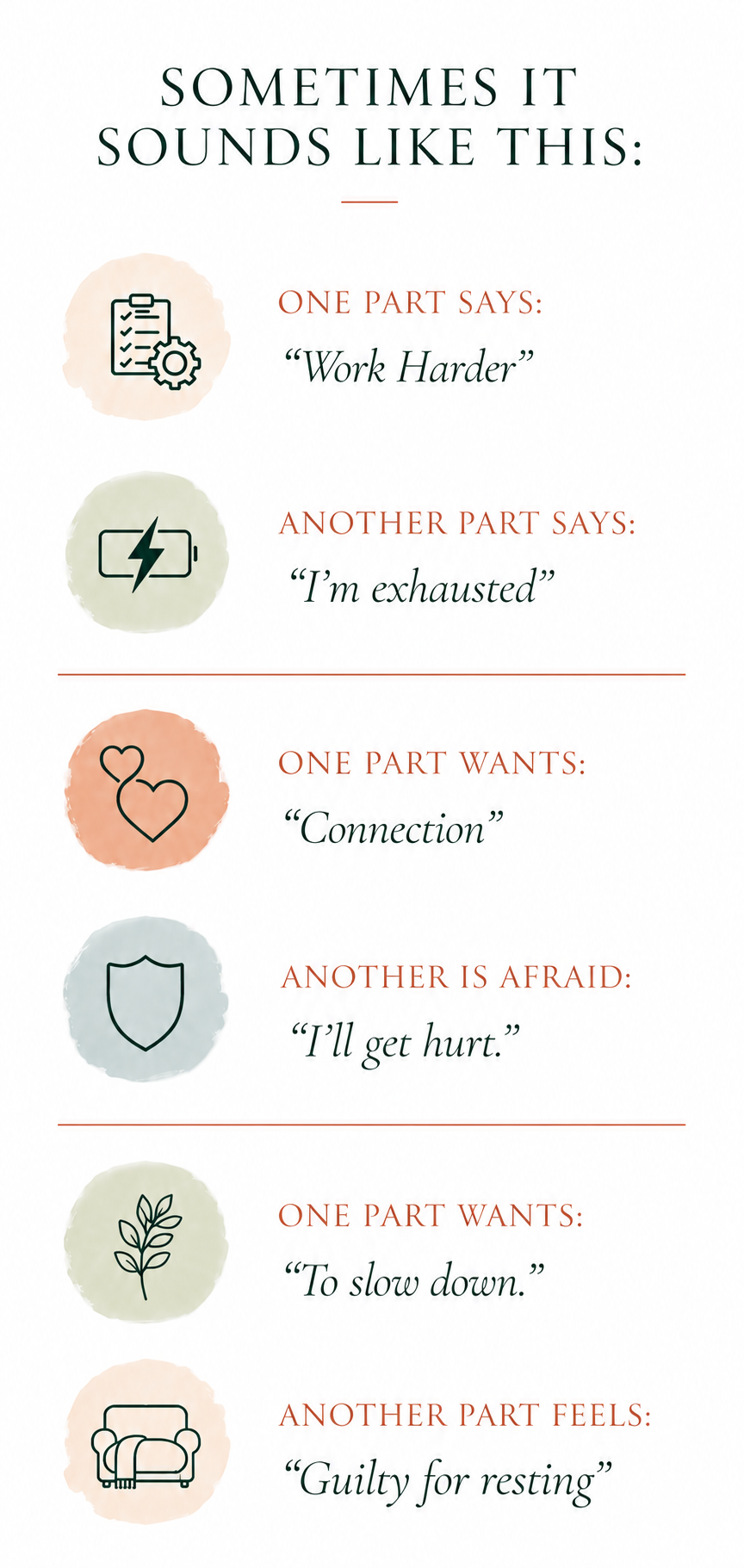
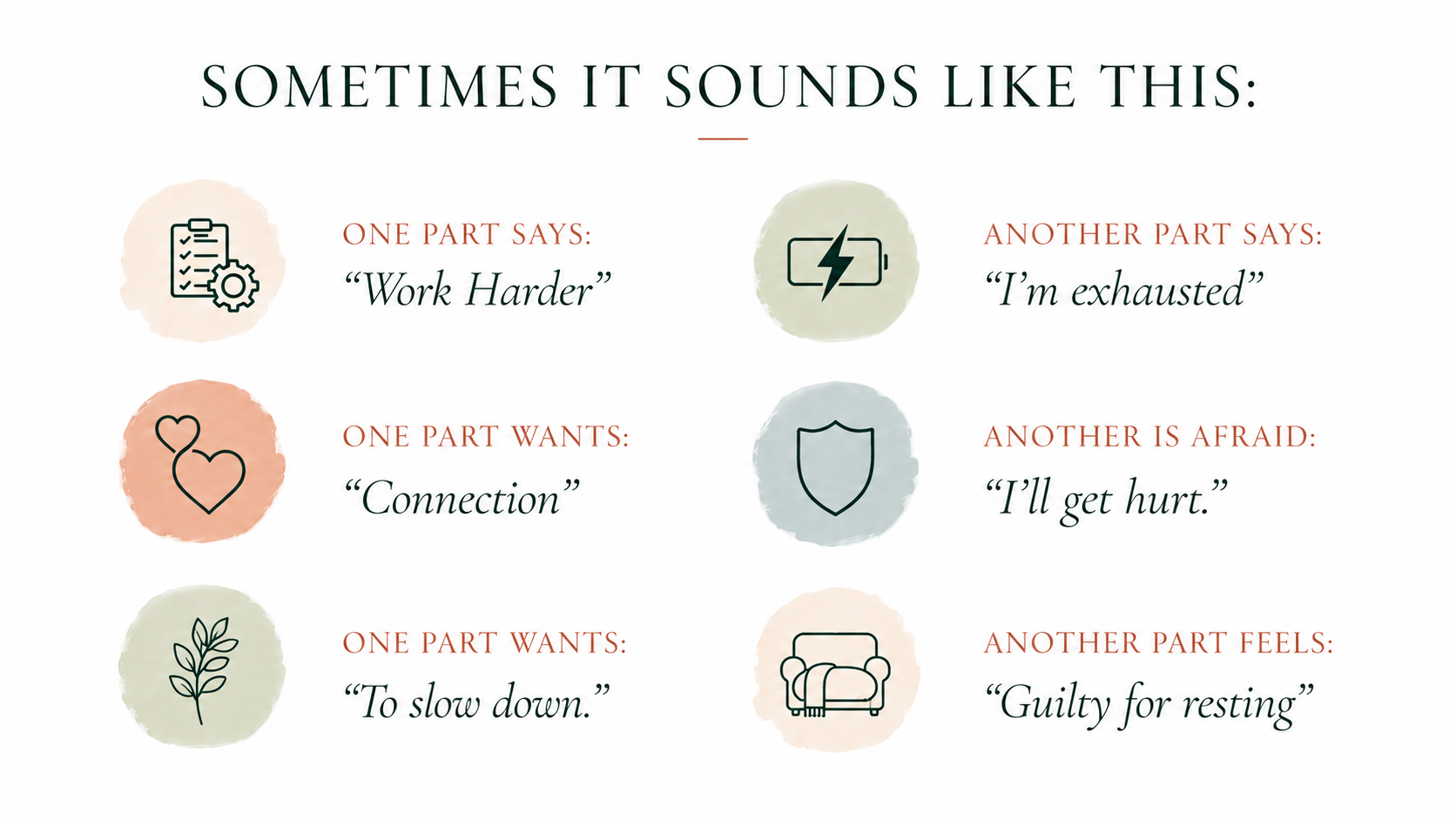
That tug-of-war has a name.
One of the foundational pillars of my work is from a framework called Internal Family Systems. Despite the name, it isn’t actually about your actual family — it’s the idea that you're made up of different “parts,” each trying to protect you in its own way.
None of these parts are bad. The part that pushes you to work harder, the part that people-pleases, the part that has its walls up and stays guarded —they all developed for a reason, usually to keep you safe from something. Our work isn’t about getting rid of them. It’s about helping them trust you enough to stop jumping in to protect you from something that may not actually be happening anymore.
One of the foundational pillars of my work is from a framework called Internal Family Systems. Despite the name, it isn’t actually about your actual family — it’s the idea that you're made up of different “parts,” each trying to protect you in its own way.
None of these parts are bad. They are all trying to help in the ways they know how.
Our work isn’t about getting rid of them. It’s helping them learn to trust you enough that they don’t have to work quite so hard anymore.
If you want to go deeper on IFS, you can read more here.
But don’t worry, we’ll talk plenty about parts work in our sessions together.
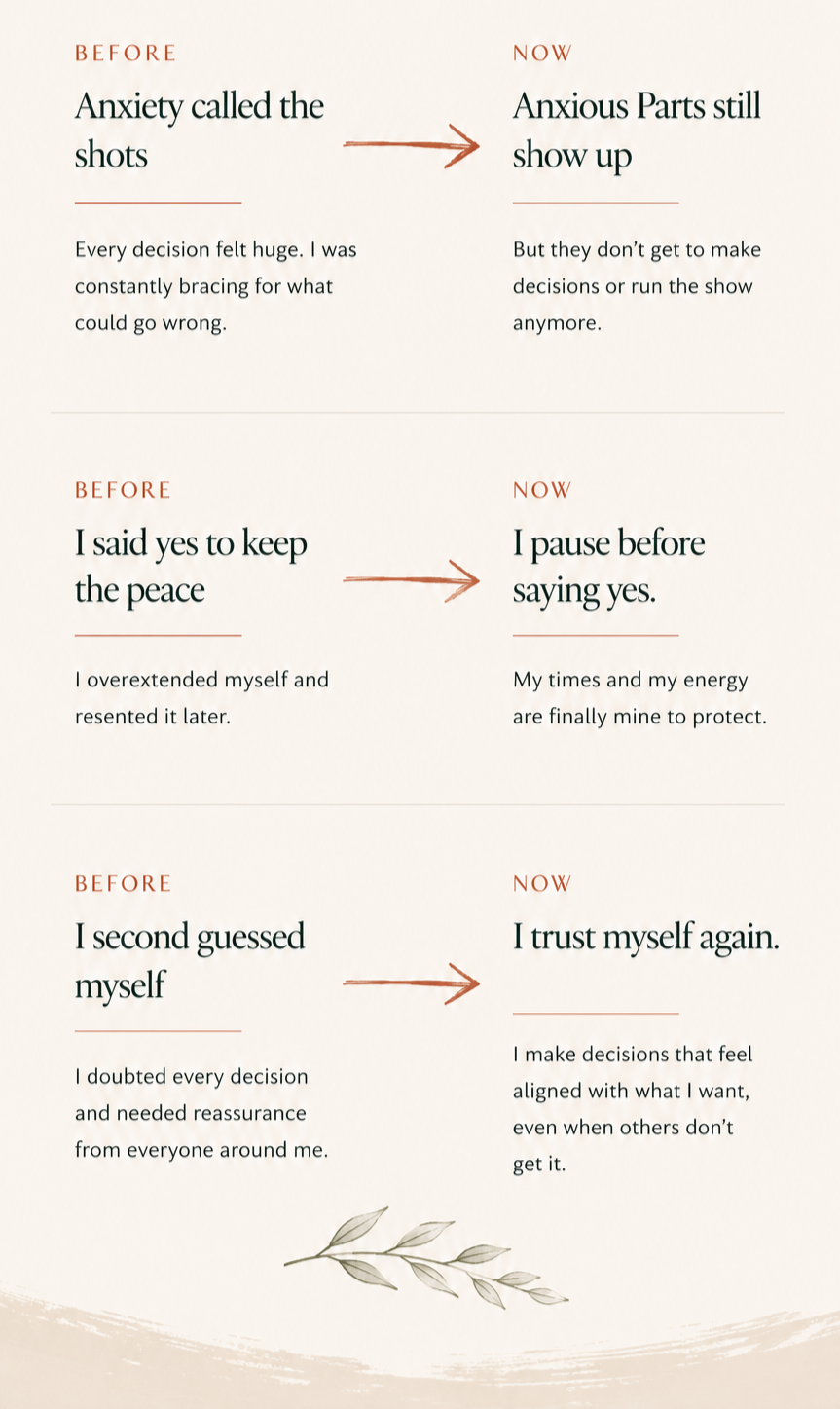
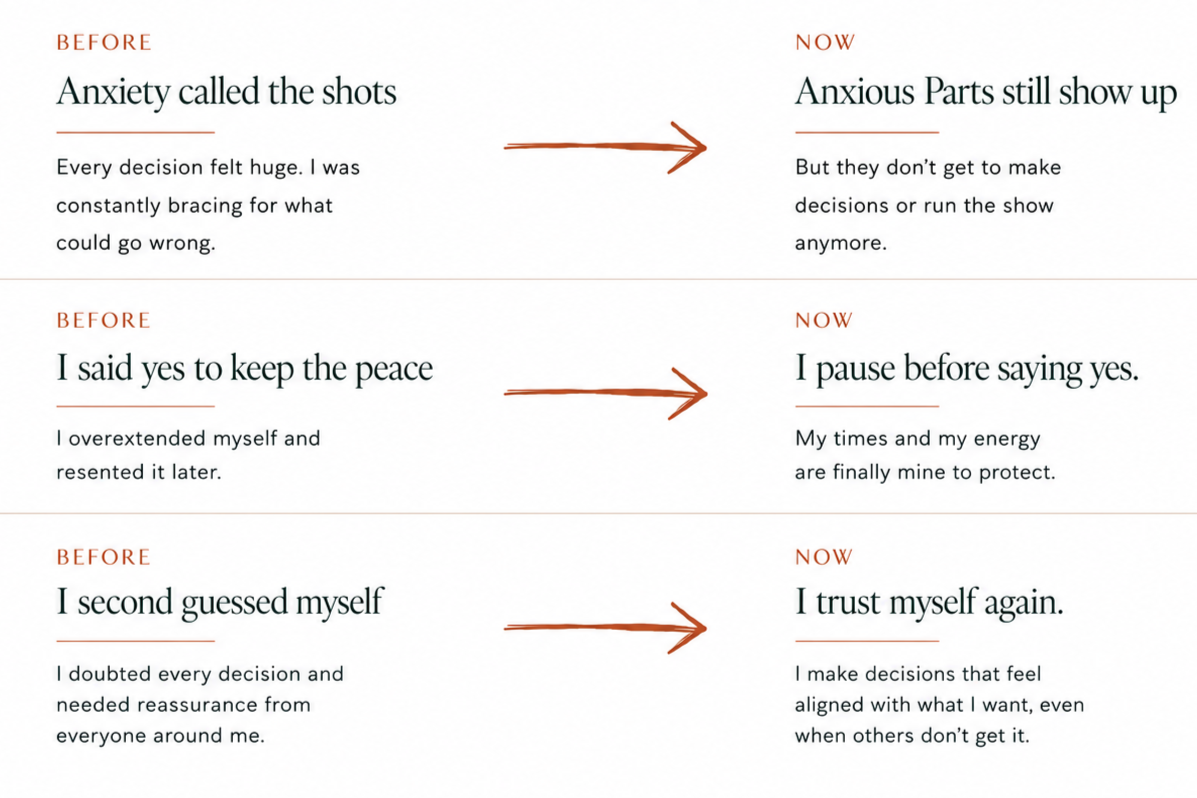
Therapy isn't about becoming a different person. It's about slowly reconnecting and feeling more like yourself.
Anxiety may still show up at times, and you may still catch yourself overthinking on occasion, but those parts no longer get to make the decisions for you.
Boundaries start to feel less like something you have to force and more like a natural extension of who you are. You trust yourself in ways you couldn't before, and little by little, you begin creating a life that feels more aligned with who you've been underneath it all.
THE SHIFT THAT
CHANGES EVERYTHING
THE SHIFT THAT CHANGES EVERYTHING
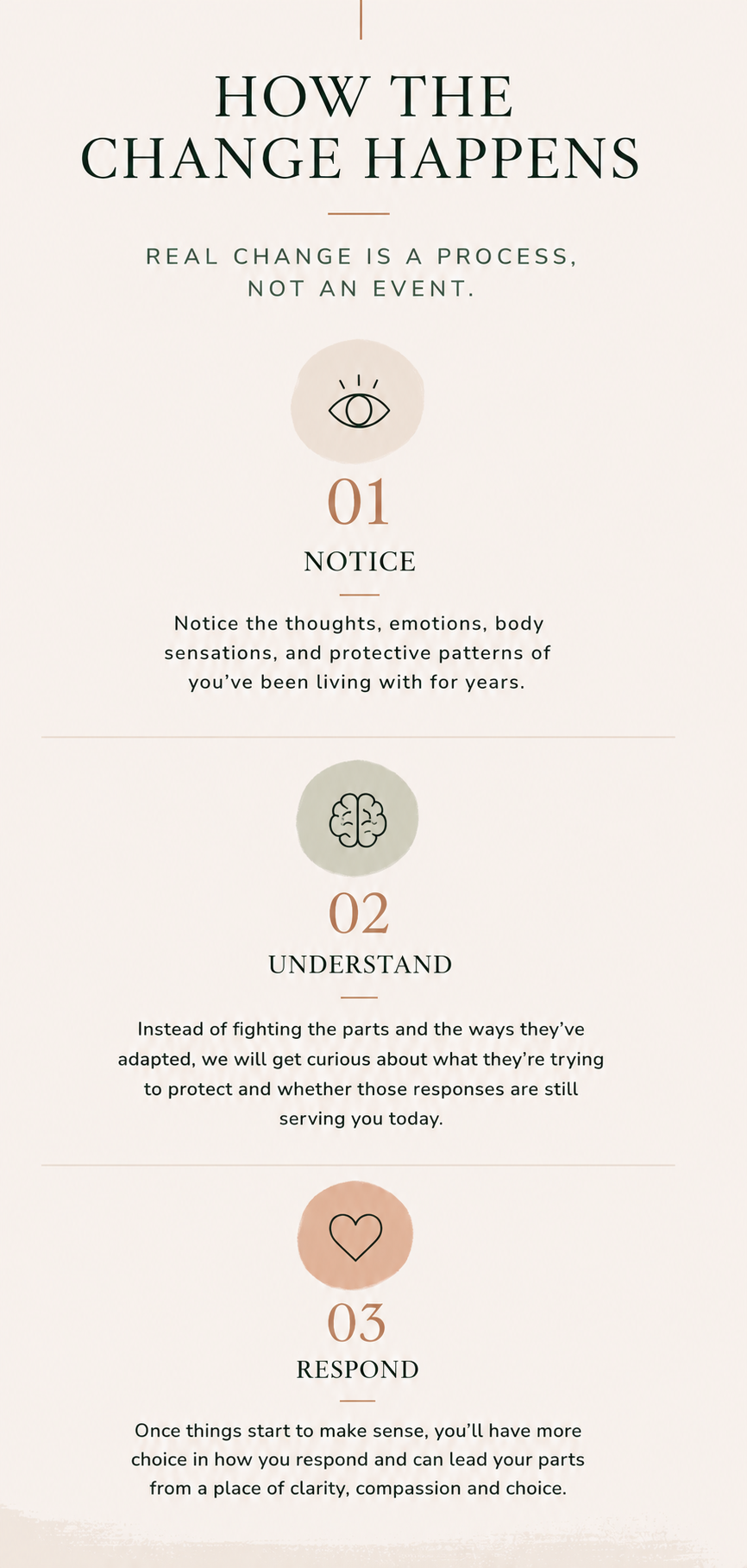
HOW THE CHANGE HAPPENS
01
NOTICE
Notice the thoughts, emotions, body sensations, and protective patterns of you've been living with for years.

03
02
UNDERSTAND
Instead of fighting the parts and the ways they’ve adapted, we will get curious about what they’re trying to protect and whether those responses are still serving you today.
RESPOND
Once things start to make sense, you’ll have more choice in how you respond and can lead your parts from a place of clarity, compassion and choice.

A lot of people come into therapy worried about how they’ll be perceived or concerned about being judged. So, they try to be the “easy” client —polished, self-aware, holding it all together.
They tiptoe around the real issues. They soften the hard parts or make jokes when something actually hurts. They explain away their anger, choke back tears and minimize what happened.
“This is going to sound so bad…”
“I know I shouldn’t feel this way…”
“It’s not a big deal…”
But you don’t have to do that here.
Not with me.
In fact — I prefer you didn’t.
I’ll sit with you through the hard stuff, and I’ll also gently point out the places you might be getting in your own way.
Because real change usually comes from getting honest enough to see what’s actually going on— and having someone in the room who won’t let you talk yourself out of it.
That’s the work.
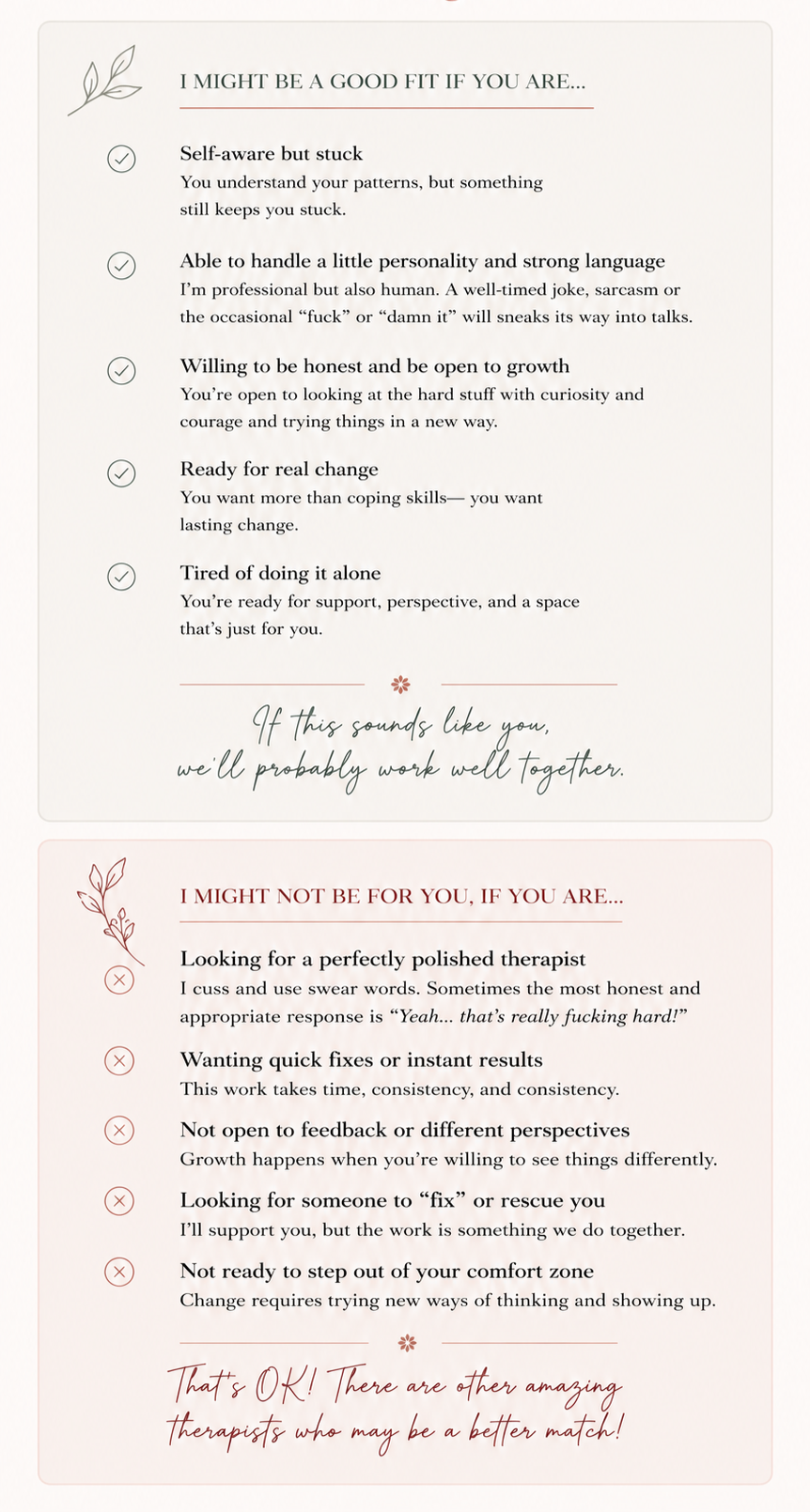
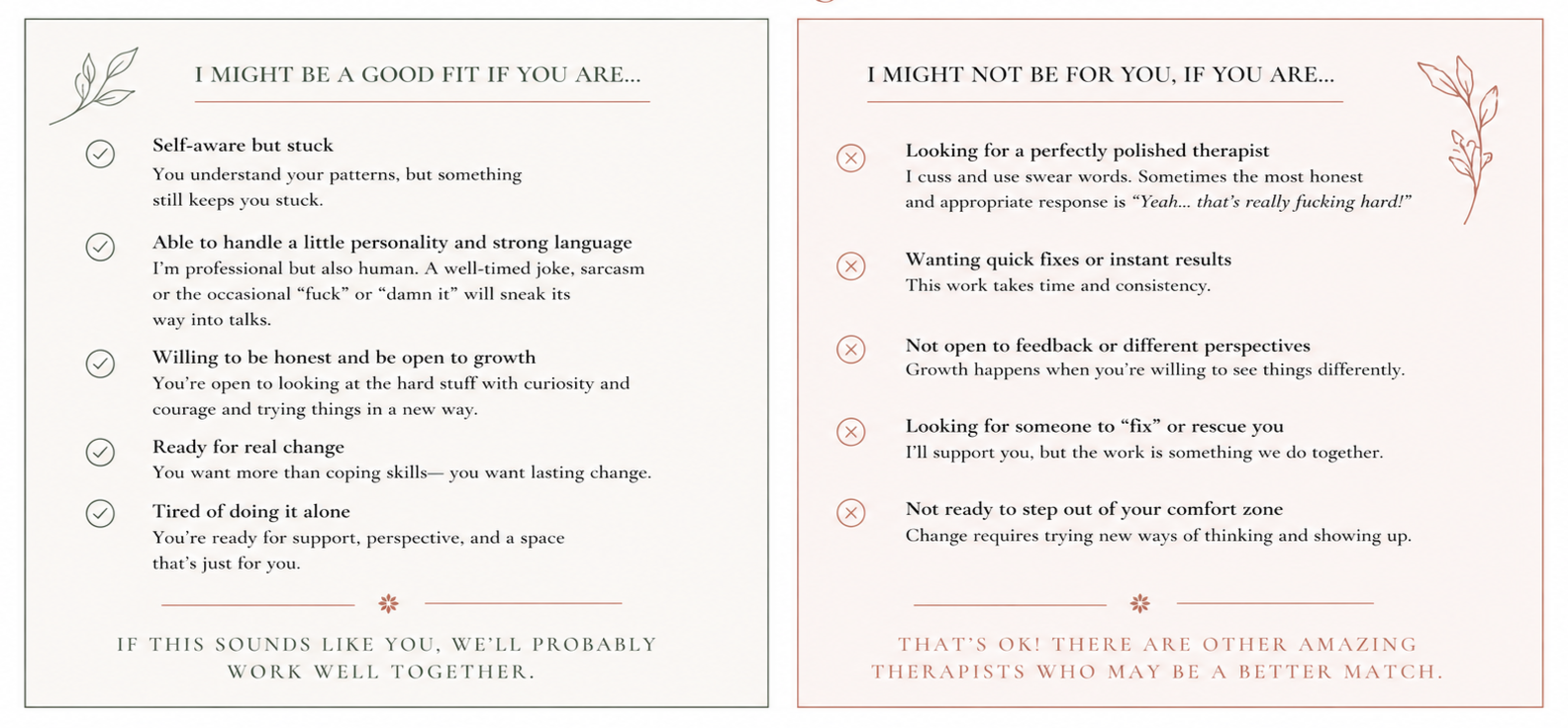
WE MIGHT BE A GOOD FIT
And we might not!
Research tells us that one of the strongest predictors of success in therapy, is the relationship between the therapist and client. In other words, feeling comfortable, understood, and genuinely connected matters.
That's why I believe finding the right fit is so important. The approaches and tools I use matter, but the foundation of our work will always be a relationship where you feel safe enough to show up as yourself.
Truthfully, my style isn’t for everyone. And that’s OK!

Ready to Have
Me In Your Corner?
Starting therapy can feel like a big step. But if you’re here, something isn’t sitting right anymore. You don’t need to be falling apart to deserve support, and you don’t have to wait until things get worse to do something about it.
If you’re curious about working together, reach out to schedule a free 15-minute consultation or initial session.
You don’t have to keep pushing through this on your own.